The Department of Dravyaguna is a vital part of our institution, dedicated to the study and exploration of materia medicaand Ayurvedic pharmacology. Dravyaguna, defined as:
द्रव्याणां गुणकर्माणि प्रयोगः विविधास्तथा।
सर्वशो यत्र वर्ण्यन्ते शास्त्रं द्रव्यगुणं हि तत्॥ (द्र.गु.वि. १ (पि.वि.श.)त् || (P V Sharma)
The science that identifies the medicinal plants by name and form along with its qualities (Guna, Rasa, Virya, Vipaka, Prabhava & Karma) and its therapeutic utilities is called Dravyaguna Vigyana.
AIM
To impart comprehensive knowledge and training in materia medica and understand the mode of action of medicinal plants through Ayurvedic principles of Guna, Rasa, Virya, Vipaka & PrabhavaTo integrate classical Dravyaguna concepts with modern botanical, pharmacognostic, and pharmacological science for better understanding and standardization of raw drugs
GOAL
Correct field and laboratory identification of medicinal plants (morphology, microscopy, taxonomy).Understanding of pharmacokinetics and pharmacodynamics of Ayurvedic drugs in terms of both classical and modern parameters. Apply Dravyaguna principles in disease management and encourage evidence-based clinical use of medicinal plants.
FACILITIES
Herbal Garden :
Well-developed garden with 200 (or more) medicinal species, with QR Codes used for teaching identification, cultivation practices (Vrkshayurveda), and live demonstrations of classical dravyas.
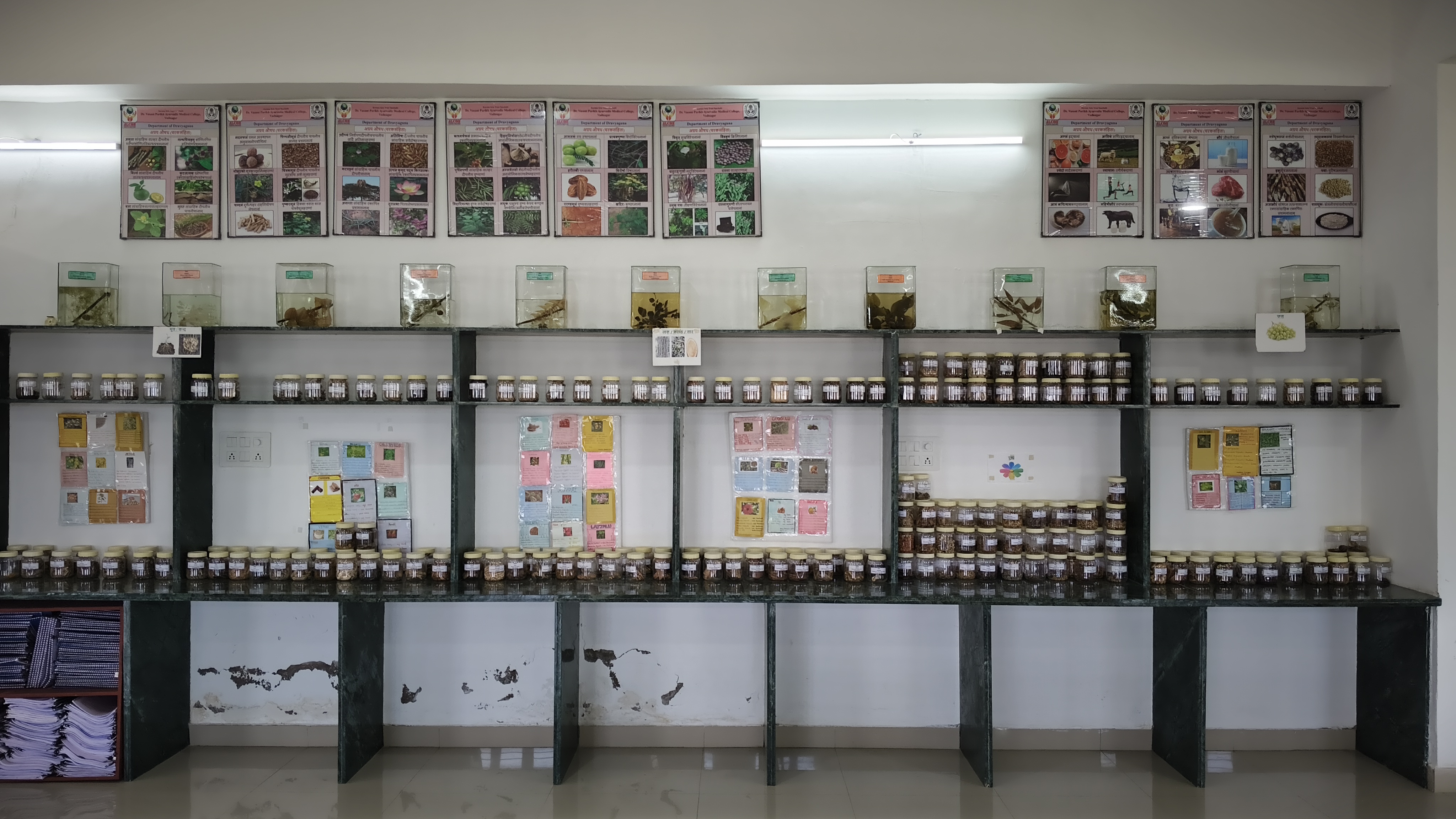
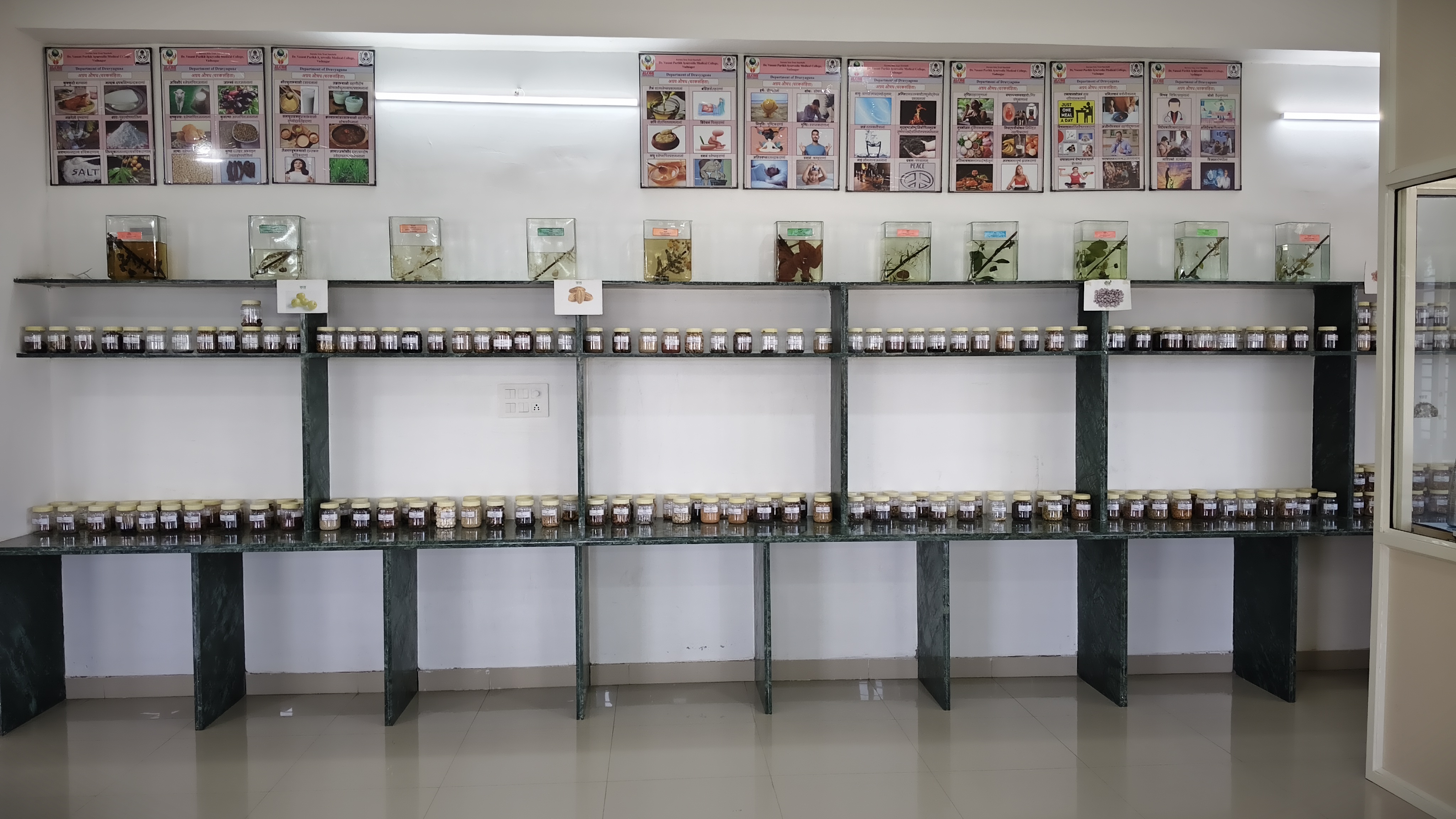
Dravyaguna museum :
Display of authenticated crude drug specimens (root, stem, bark, leaf, flower, fruit, seed, whole plant), wet and dry samples, models, and charts for student learning.
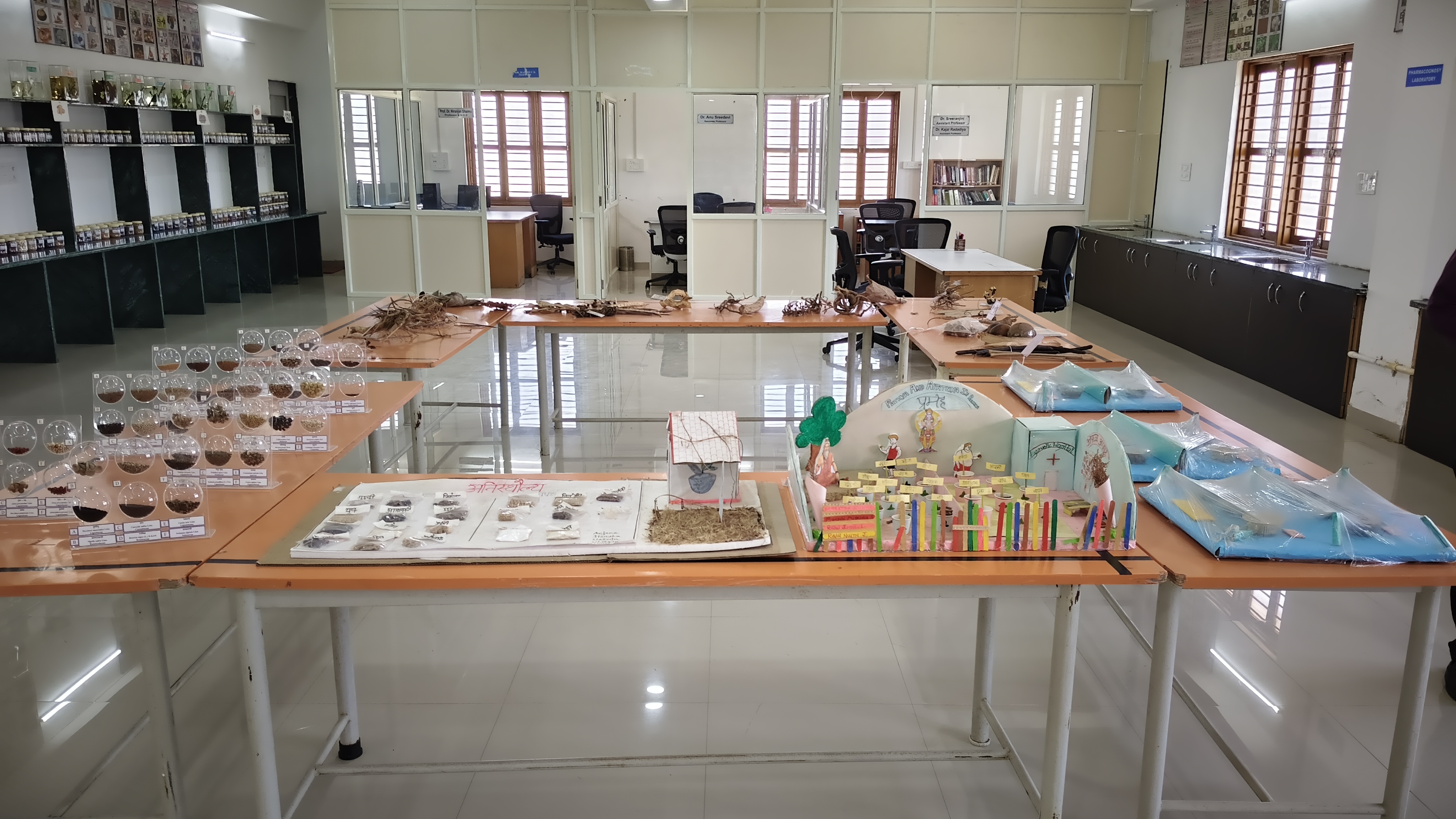
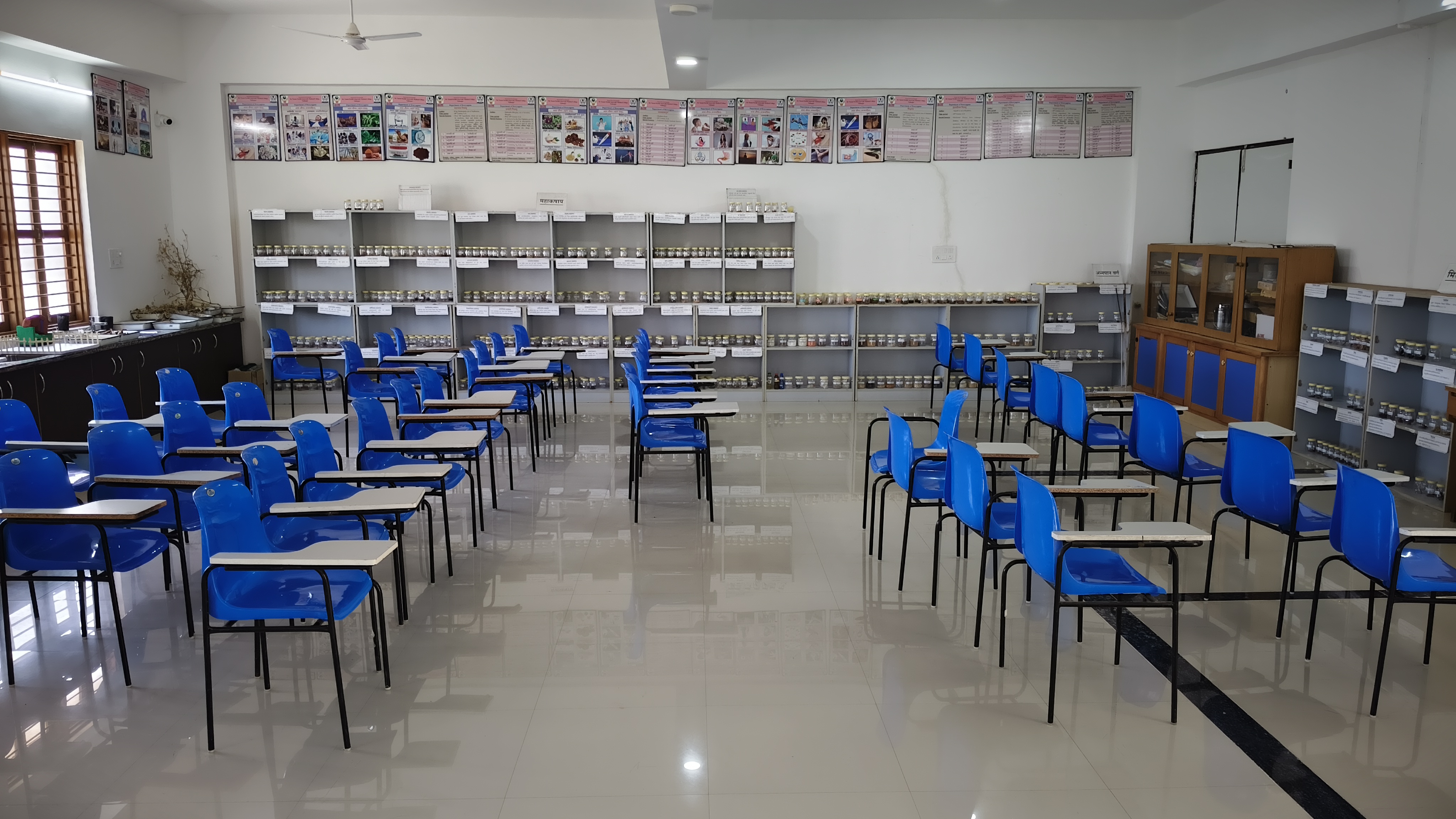
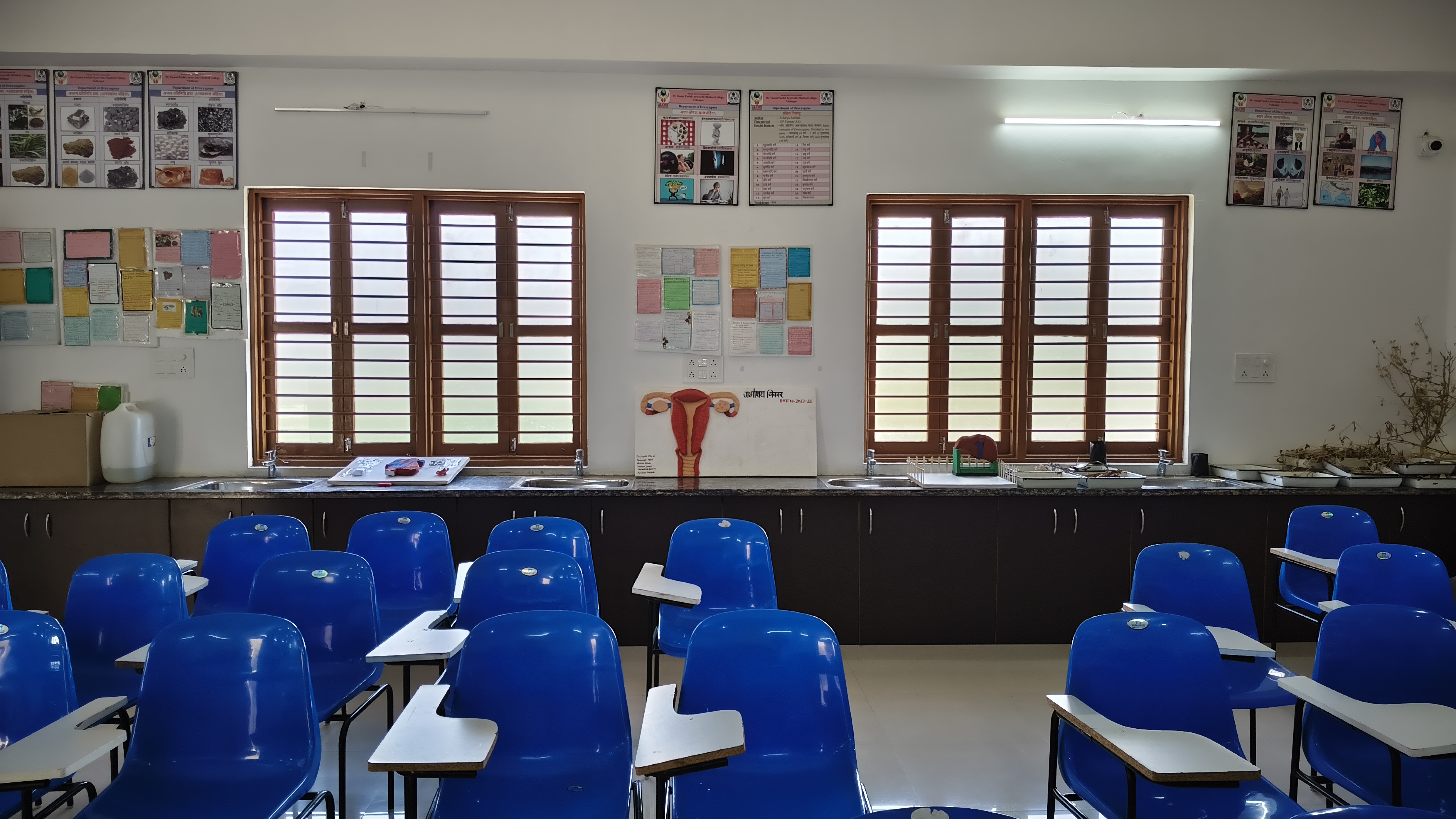
Pharmacognosy / Dravyaguna laboratory :
Highly equipped pharmacognosy laboratory with advanced analytical instruments needed for morphological and microscopic evaluation and basic physico-chemical and phytochemical analysis.
Departmental library :
Textbooks of Samhita, Nighantus, Ayurvedic Pharmacopoeia, and modern pharmacognosy/pharmacology books are available
Field visit and extension facilities :
Regular local and study tours to forests, nurseries, pharmaceutical units, and research institutes to expose students to practical aspects of medicinal plant collection, cultivation, and conservation. Regular hospital visit for students to get exposure to patients and discuss medicinal plants that can be utilised