DEPARTMENT OF KRIYA SHARIR (AYURVEDIC PHYSIOLOGY)
-
The Department of Kriya Sharir deals with the functional study of the human body as explained in classical Ayurvedic texts and correlated with modern physiology. It forms the fundamental subject for understanding health, disease, diagnosis, and treatment in Ayurveda.
-
Kriya Sharir is the science of normal physiological functions of the body, explained through Dosha,Dhatu,Mala,Agni,Srotas,Indriya,andManas.The Departmentaimstoprovideastrong conceptual foundation to BAMS students by integrating classical Ayurvedic principles with contemporary physiological knowledge.
-
To create knowledgeable,competent,andethically sound Ayurvedic physicians with a deep understanding of physiological principles based on Ayurveda and modern science.
- To impart thorough knowledge of Kriya Sharir as per classical texts.
- To correlate Ayurvedic concepts with modern physiology.
- To develop analytical and clinical thinking among students.
- To encourage academic discipline and research aptitude.
OBJECTIVES OF THE DEPARTMENT
- To explain normal bodily functions through Ayurvedic principles.
- To understand Dosha equilibrium in healthy individuals.
- To correlate Ayurvedic physiology with modern physiological mechanisms.
- To prepare students for clinical and diagnostic subjects.
- To provide practical exposure through laboratory experiments.
Bachelor of Ayurvedic Medicine and Surgery(BAMS)Subject:Kriya Sharir Taught during First Professional BAMS as per NCISM syllabus.
- Dosha Siddhanta and Tridosha Kriya
- Agni and Ahar Parinama
- Dhatu and Mala Kriya
- Srotas Sharir
- Indriya and Manas Sharir
- Prakriti and its physiological basis
- Basic modern physiology
- Classical text-based teaching with Shloka explanation
- Use of charts, models, and audio-visual aids
- Interactive lectures and doubt-solving sessions
- Integrated teaching with modern physiology
- Practical-oriented and examination-focused approach
LABORATORY AND FACILITIES
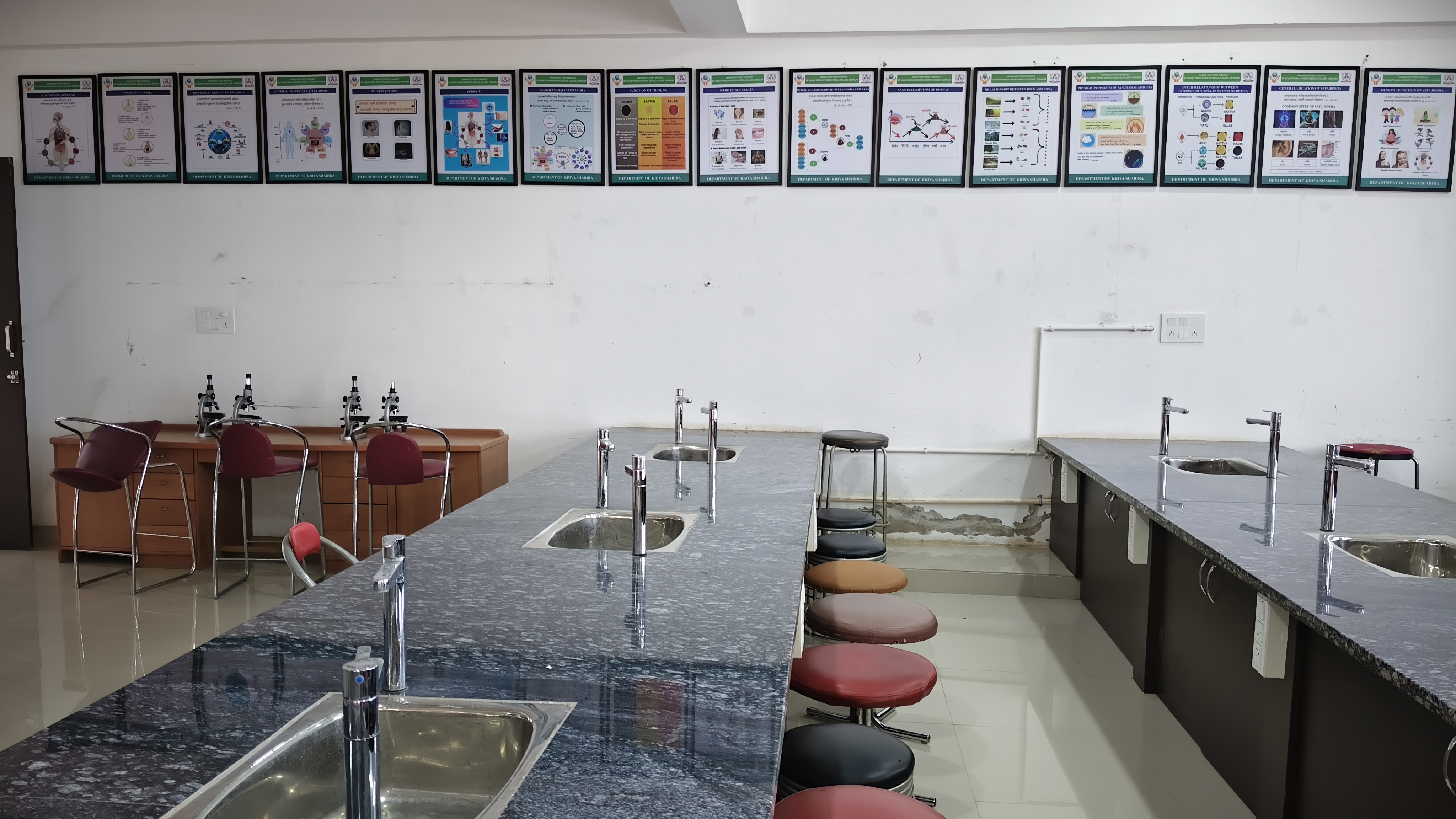
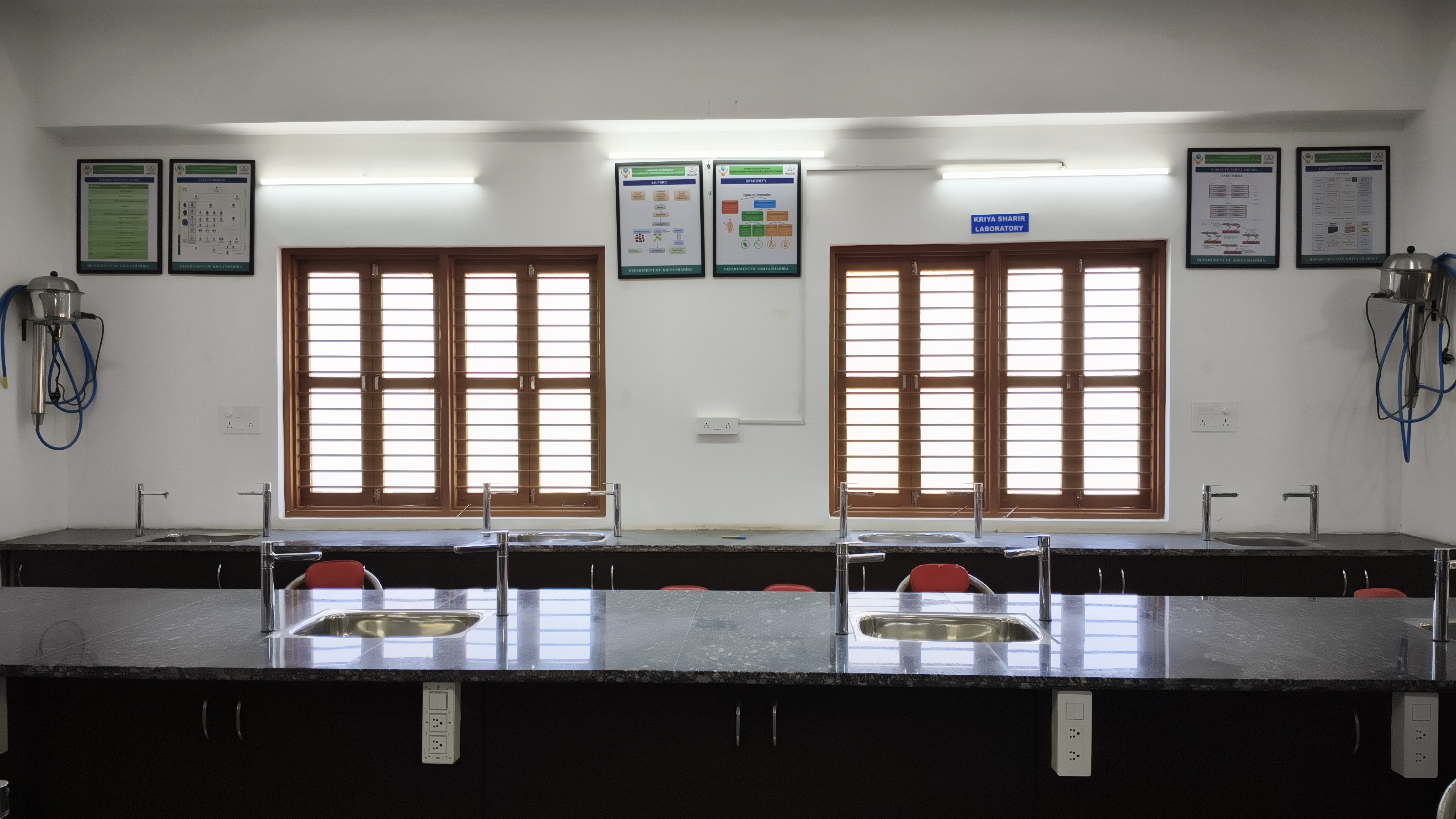
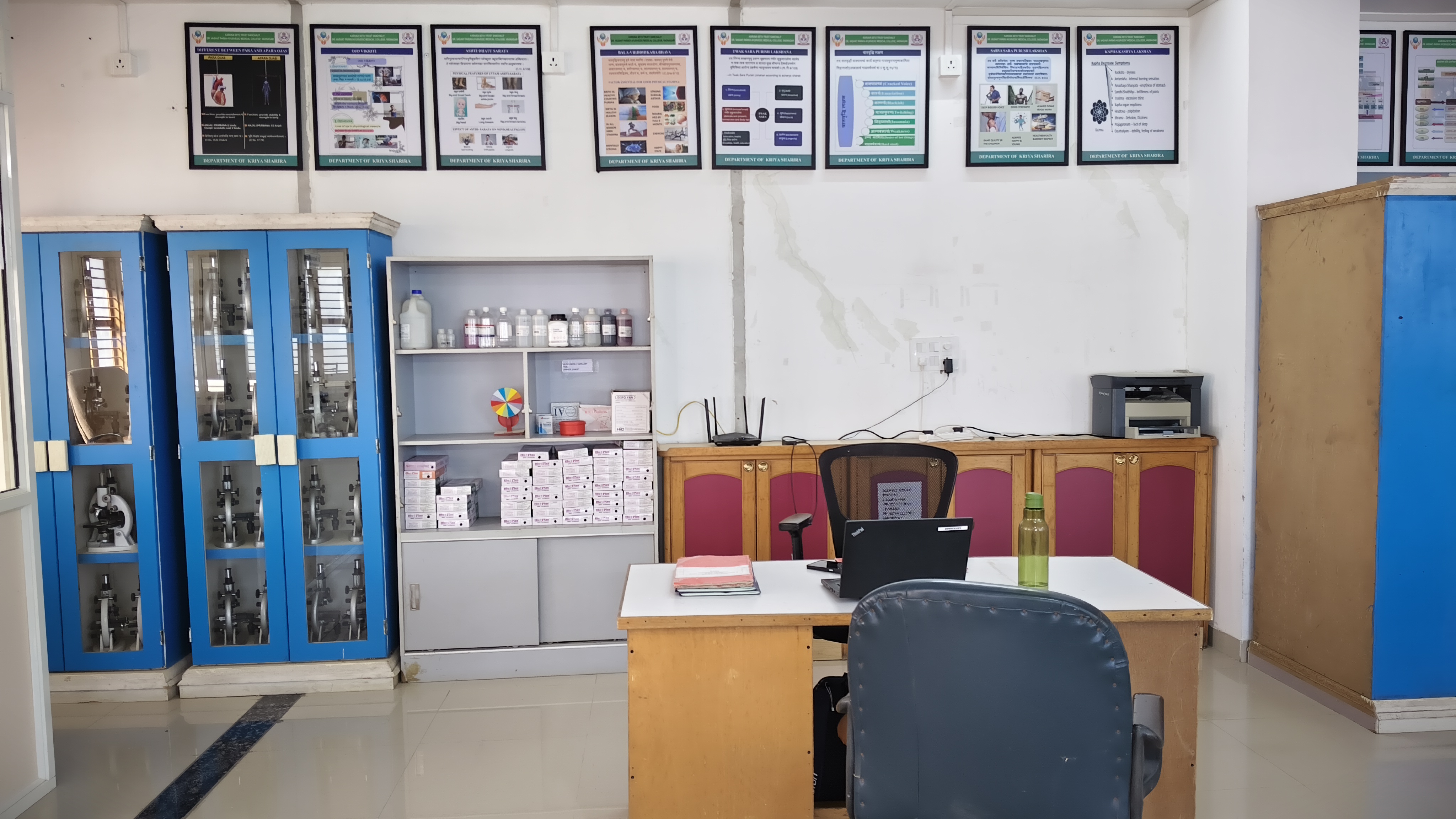
- Well-equipped Kriya Sharir practical laboratory
- Physiology instruments and hematology setup
- Charts and anatomical models
- Facilities as per NCISM norms
- Reference books and journals
- Theory lectures and practical sessions
- Student seminars and presentations
- Tutorials and revision classes
- Internal assessments and viva voce
- University examination preparation
- Clear understanding of Ayurvedic physiology
- Ability to correlate physiology with clinical practice
- Strong foundation for pathology and medicine
- Improved diagnostic and analytical skills
-
Knowledge of Kriya Sharir is essential for clinical practice, teaching, research, and integrative medical approaches in Ayurveda.