DEPARTMENT OF RASASHASTRA & BHAISHAJYA KALPANA
- The Department of Rasashastra & Bhaishajya Kalpana (RSBK) teaches the theory and practical skills for preparing, standardizing, and safely using classical Ayurvedic medicines. It blends traditional Ayurvedic pharmaceutics with modern quality and laboratory practices, preparing students for academic, clinical, and industry roles in Ayurvedic pharmacology and formulation.
-
To be a centre of excellence in Ayurvedic pharmaceutics that integrates classical wisdom with modern quality principles and hands‑on learning.
-
Deliver deep theoretical and practical training in Ayurvedic drug formulation and processing.
-
Build proficiency in pharmaceutics, standardization, and quality control.
-
Encourage research, innovation, and responsible use of herbal and herbo‑mineral preparations.
-
Equip graduates for careers in teaching, research, clinical formulation, and industry.
KEY TEACHING ACTIVITIES :
-
Theory classes on classical texts, pharmaceutics, and safety.
-
Hands‑on labs for preparing and evaluating Ayurvedic formulations.
-
Demonstration sessions in dedicated rooms to show classical techniques, processing steps, and quality checks.
-
Integrated learning on classical texts, pharmaceutics, and safety.
-
The cosmetic seminar focused on the basics of cosmetic science, herbal cosmetics, and safety aspects. It highlighted the integration of Ayurveda with modern cosmetic formulations, along with an overview of raw materials, formulation methods, quality control, and regulatory requirements. The seminar enhanced understanding of safe and effective cosmetic product development.
Teaching Pharmacy and demonstration rooms
-
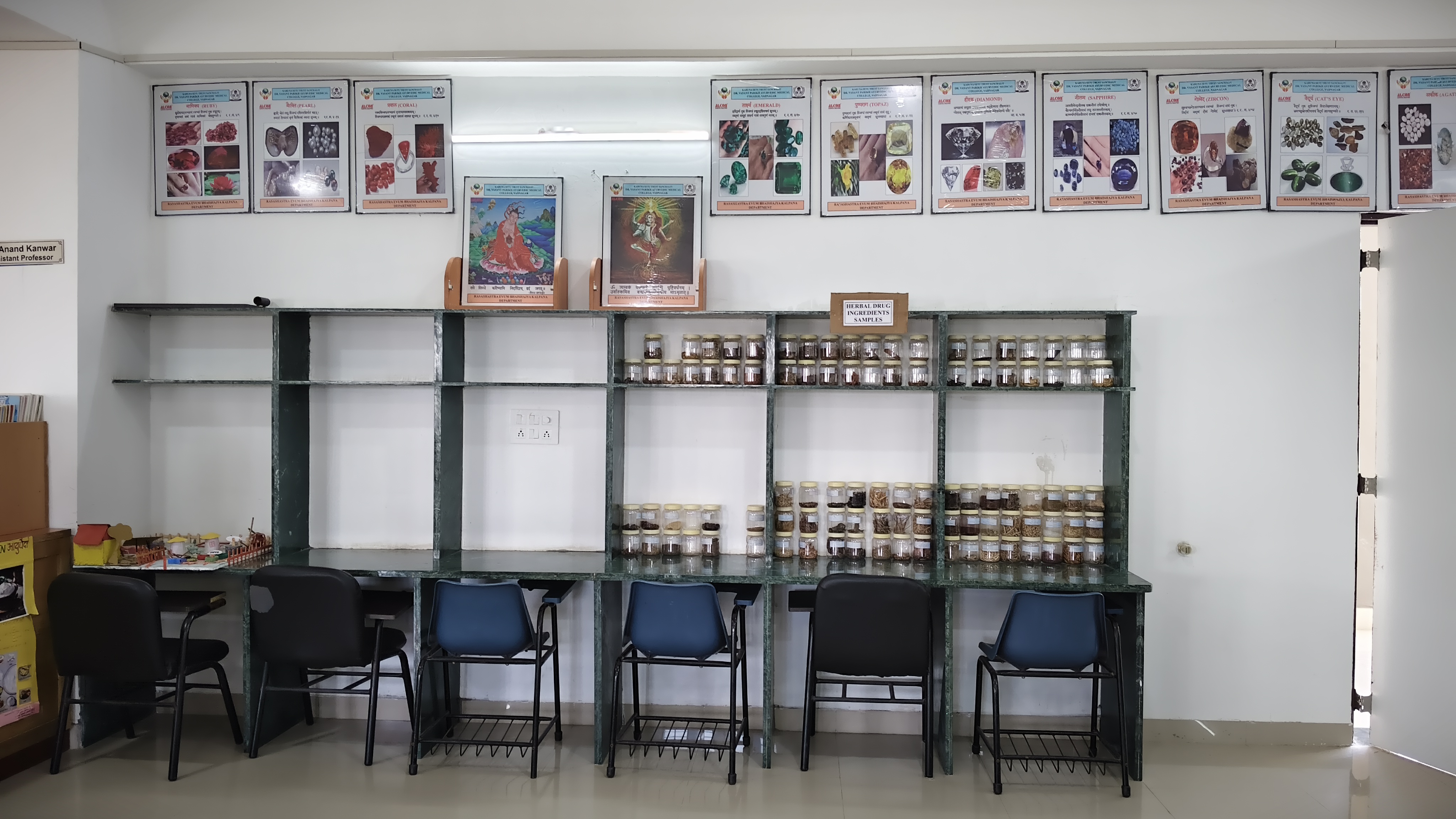
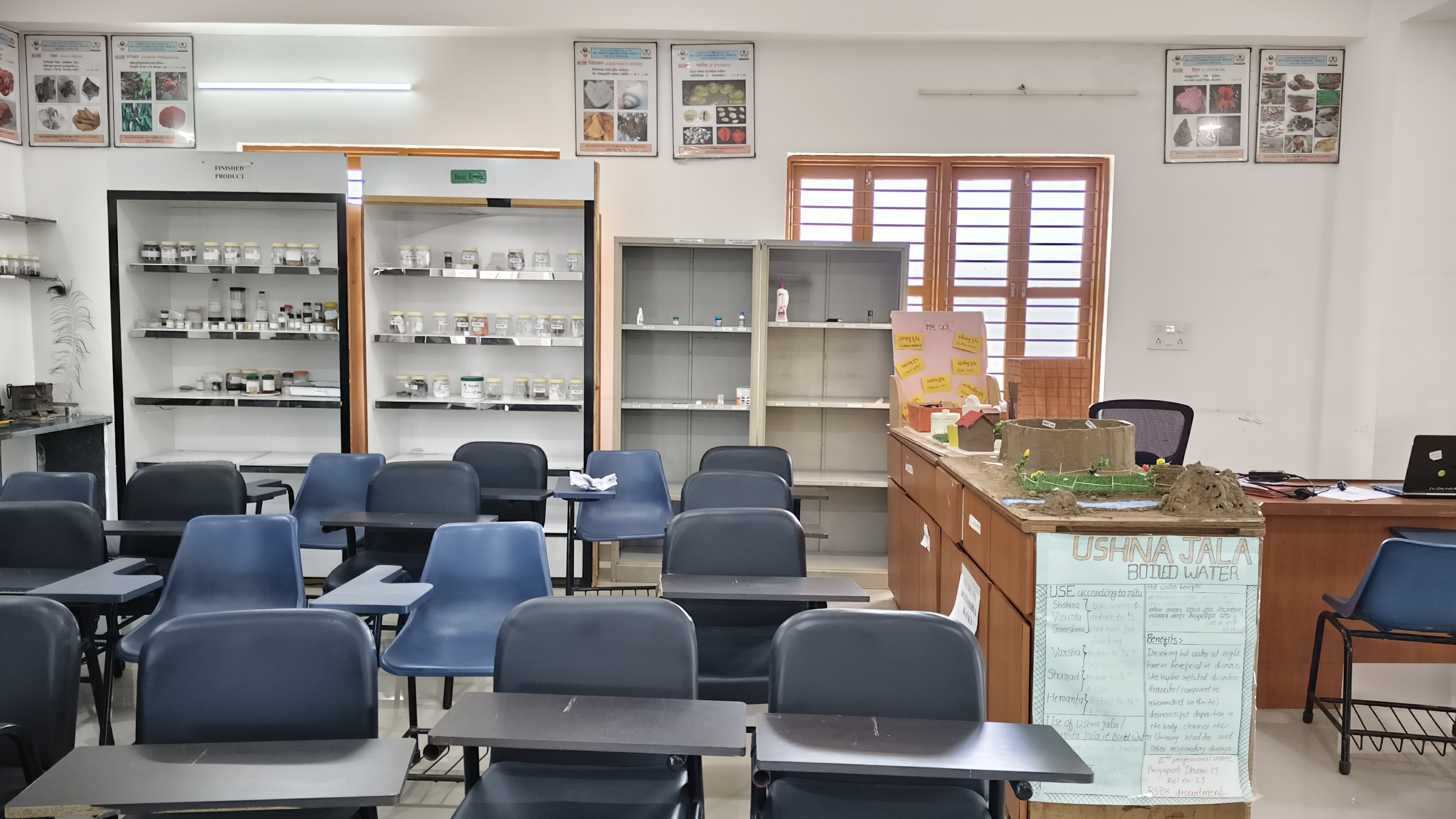
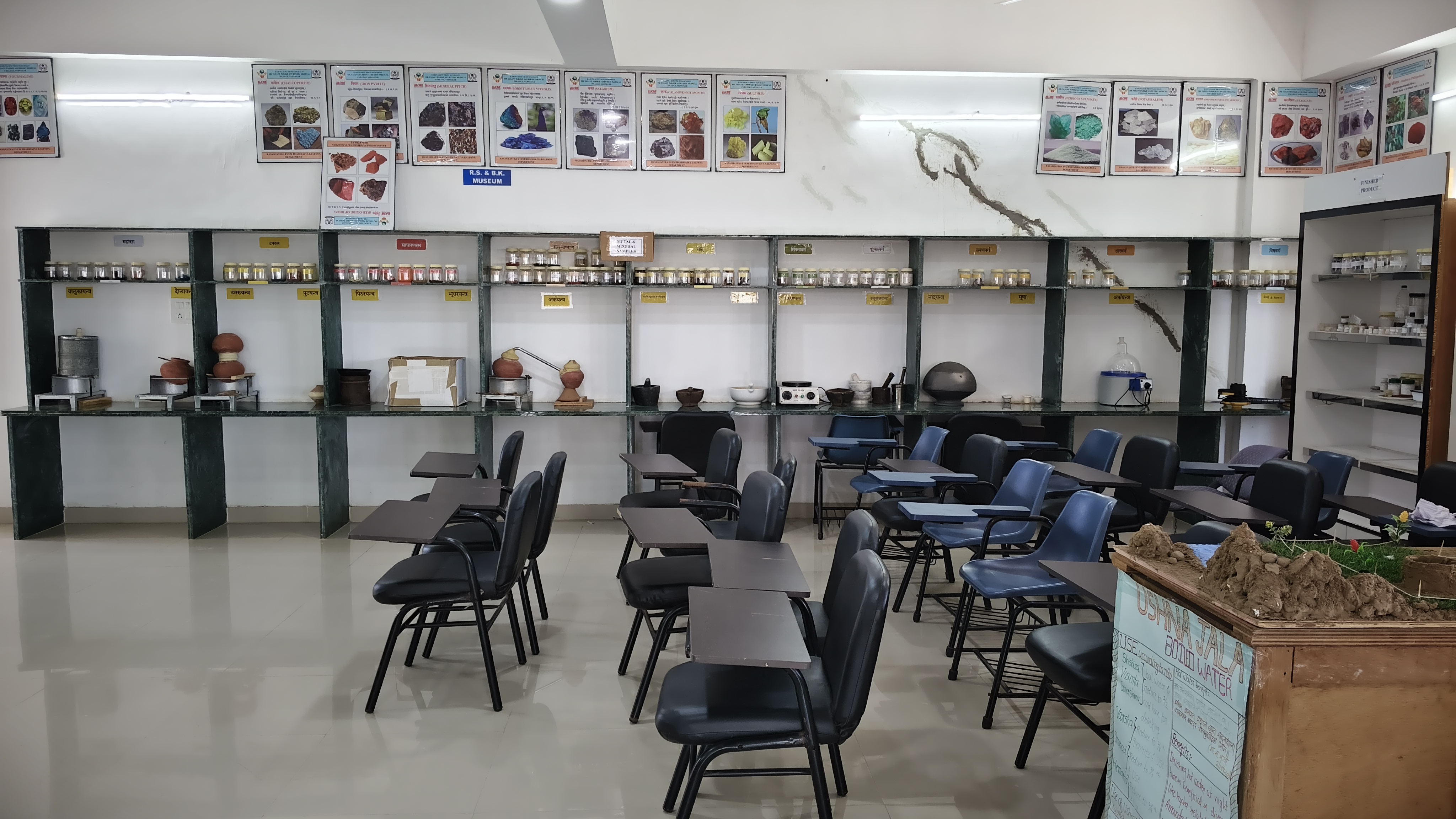
Well‑equipped labs support department‑specific practicals, with space for students to practice formulations and quality assessments under guidance. Demonstration rooms allow faculty to showcase processes and techniques step‑by‑step.
-
On‑campus herbal garden resources feed practical training and help students connect raw materials with finished formulations.
-
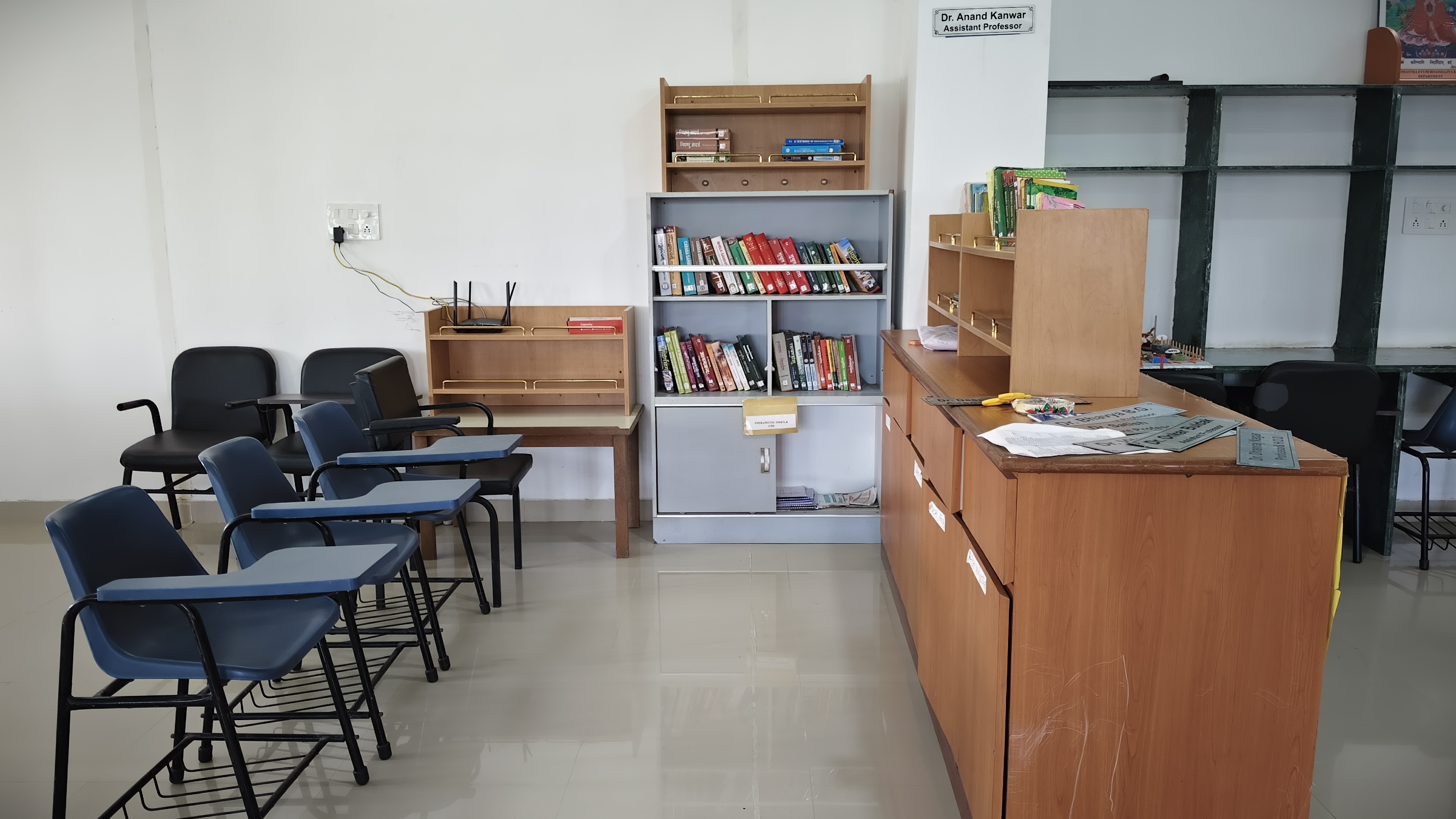
A large, well‑stocked library supports student research and reference needs, offering Ayurvedic and medical texts, journals, and study materials. This resource is shared across the college to bolster academic work.
Museum and model‑based learning
- The college fosters experiential learning through exposure to anatomical and clinical resources. A recent field visit by the college’s students to a nearby medical college highlighted the value of museum displays, including anatomical specimens, models, and charts, for deepening understanding.
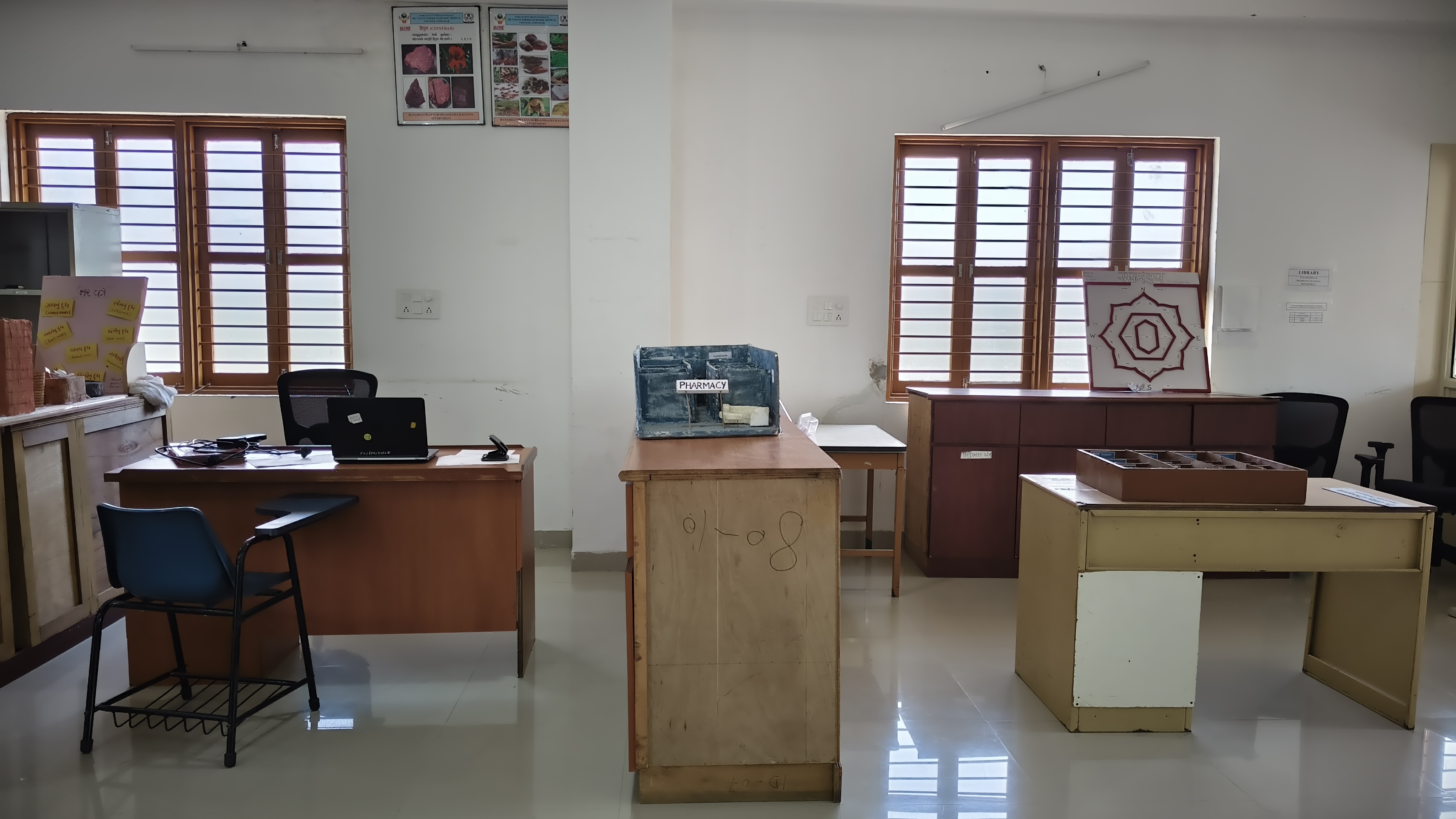
- RSBK students benefit when similar structured, visual, and physical learning aids—such as wall charts, models of preparation equipment, and specimen displays—are integrated into departmental teaching spaces.
- These tools help translate classical concepts into visual, tangible formats that reinforce memory, clarify procedures, and support safe handling of materials.
Museum / learning resource room: proposed or existing setup
A dedicated resource room or mini‑museum can support RSBK teaching with:
- Wall charts
- Stepwise formulations, processing flowcharts, safety precautions, and quality control checklists.
- Classical text references aligned with modern lab practices.
- Physical models and displays
- Scaled models of preparation apparatus, vessels, or equipment used in classical pharmaceutics.
- Samples or mock‑ups showing stages of processing raw herbs or minerals.
- Specimen cases or visual panels.
- Examples of raw drugs, processed forms, or standardized product batches.
- Descriptive panels on identification, storage, and handling.
- Interactive or demonstration corner.
- Space for live demos using small batches or simulation kits.
- Supports faculty‑led sessions or student presentations.
- These resources make the department environment richer, echoing the proven benefit of museum and model‑based learning seen during college‑level educational field visits.
Academic curriculum highlights
The department’s teachings connect directly to the broader BAMS syllabus followed by the college, which includes Rasashastra among core subjects. Students receive exposure to classical theory, practical formulation, and related clinical knowledge over their professional years, as part of the college’s established academic structure.
Career and further study pathways
Graduates or undergraduates focusing on RSBK can pursue:
-
Pharmaceutical formulation and quality assurance roles in Ayurvedic medicine manufacturing.
- Research positions in drug development, standardization, or safety evaluation.
- Teaching and academic careers in Ayurvedic colleges, especially in pharmaceutics and related departments.
- Clinical consultancy where preparation and understanding of classical medicines are critical.